
Tenor saxophone mouthpiece Session Configurable
Our configurable and versatile tenor mouthpiece
Our configurable and versatile tenor mouthpiece
- DESCRIPTION
- REVIEWS
We designed a large range of mouthpieces for tenor saxophone that we call the Session model series.
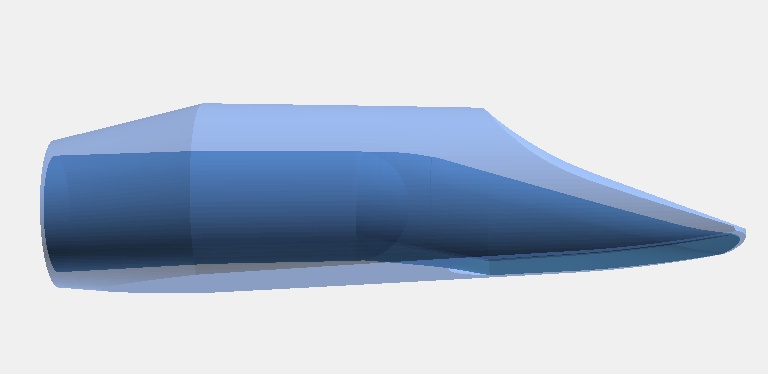
They all have in common the smooth transition from chamber to bore. There is no narrowing. Depending on their configuration they can be used for a wide range of music from classical jazz to rough funk. We selected our favorite model for smooth jazz. You can find it with this link.
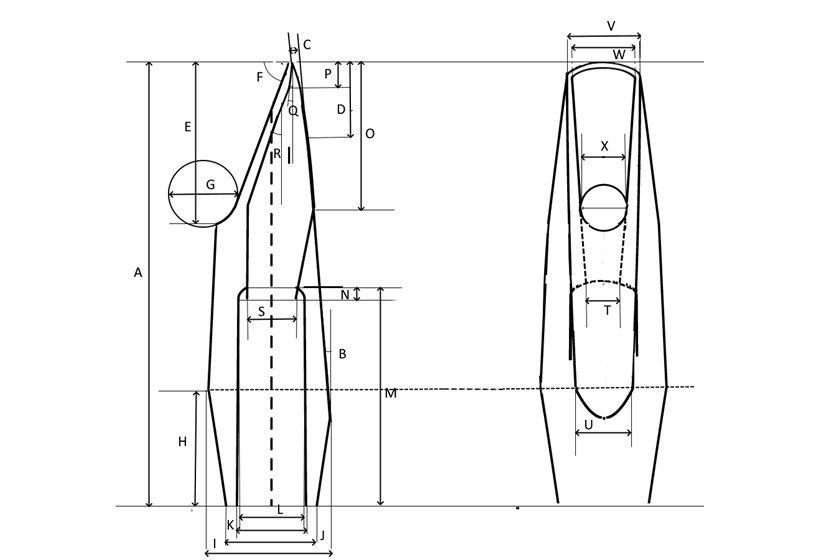
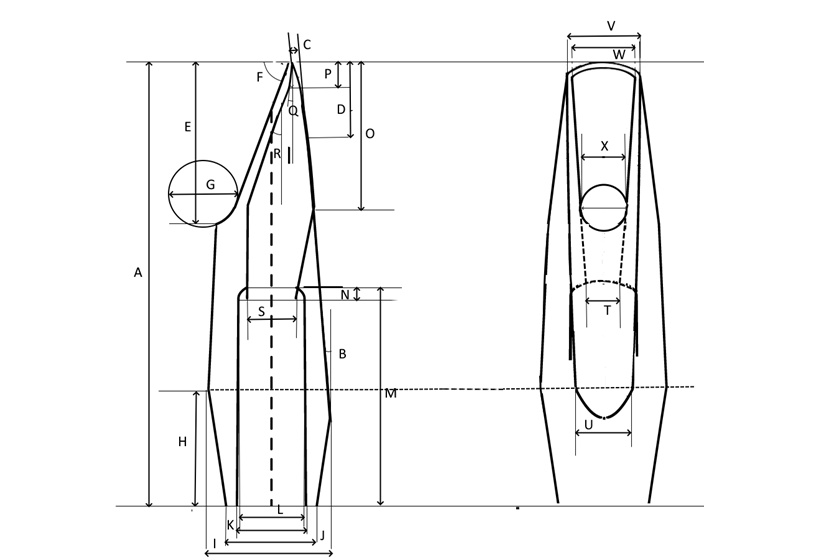
it is possible to configure your favorite mouthpiece. The following parameters can be configured:
- tip opening
- facing length
- table angel
- beak angel
- baffle length
- baffle angle
- bore diameter
Of course it requires experience to configure your own mouthpiece. Some players know exactly the characteristics of their current mouthpieces (e.g. by measuring it) and maybe also know what they need to achieve their optimal mouthpiece. Configuring a mouthpices is like making whine. Combining several tastes to one beautiful blend. Different parameters sometimes have the same effect (for example, articulation speed), but different side effects that you may or may not want.
It is possible to come along to enhance your experience by playing (or rent) a cross section of our Session mouthpieces. We call this the Session Experience. You can try a specific sequence of different mouthpieces out of this set and get a better idea of what parameters do and of what you need.
We will explain how we define the parameters and also explain their effect below:
Tipopening
A smaller tip gives more focus and articulation. You can choose this because you're also using a heavier reed. The sound also gets more body. It works well combined with a small/medium baffle. Examples are Warne Marsh or John Coltrane (jazz).
Jan Garbarek is a player that plays with a larger/longer baffle,
Without a baffle the result is a dark classical sound in the style of Sigurd Rascher.
A larger tip gives a more diffuse, more enveloping sound. This can be combined with a small/medium baffle. Well known examples are Scott Hamilton or Joe Lovano.
Exammples of a larger tip in combination with a higher and longer baffle are Sonny Rollins and Michael Brecker.
Facing lenght
A short facing makes the higher register easier to play, articulation sharper, and generally provides more resistance. A long facing makes the lower register easier to play, provides more intonation space for note bending, and less resistance, allowing for the use of heavier reeds that create more body.
The Table Angle
A larger angle provides greater clarity and projection. A smaller angle adds a bit more resistance, resulting in a more interesting sound with an edge.
The table angle p_table v can be varied from 2 to 6 degrees. The table angle is measured relative to the center line of the bore.
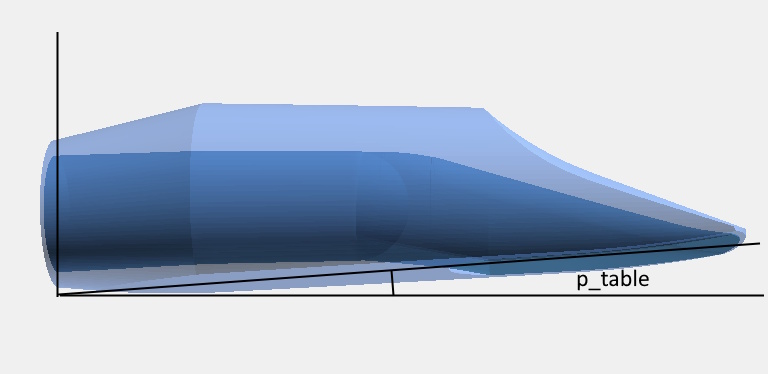
Some metal mouthpieces are known for their low table angles. We achieved a design that enables an low table angle in 3D printed mouthpieces without loosing the required strength of the mouthpiece.
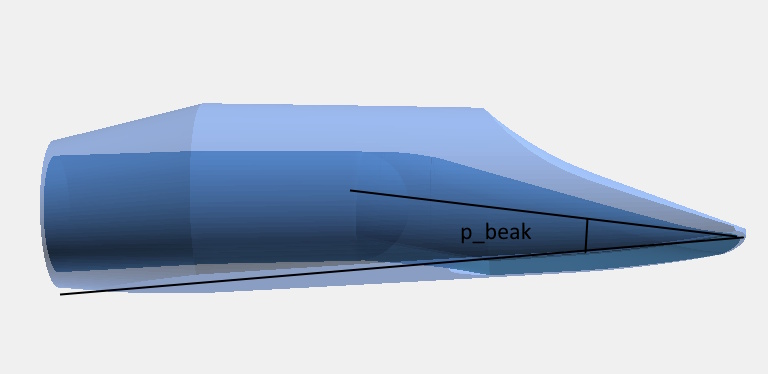
The beak angle
A smaller beak angle provides more projection, easier response, and a more focused sound with more mid-high frequencies. A larger beak angle results in more resistance, a bigger, darker sound with more mid-low frequencies. Adding a baffle can make the response easier and amplify the higher frequency spectrum, creating a broader sound across a wider frequency spectrum, even when played at low volumes.
The beak angle can be varied from 20 to 22 degrees and is measured relative to the table.
The baffle length
A short baffle gives more edge to the sound. A long baffle has almost the same effect as a smaller baffle angle, while maintaining a slightly larger chamber. It provides more projection and focus (as with a smaller chamber). A longer baffle adds more midrange frequencies to the mouthpiece's fundamental sound.
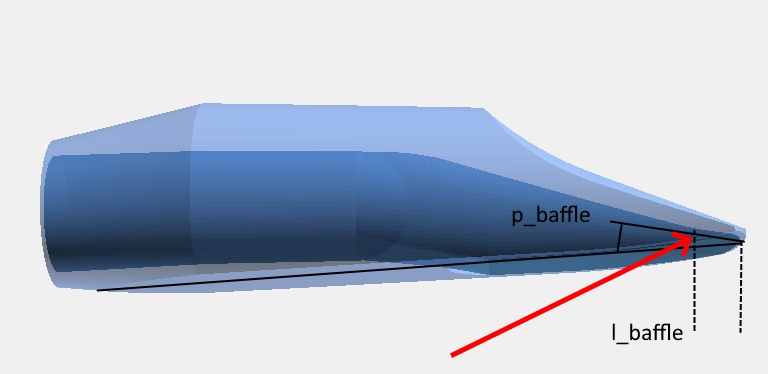
Baffle angle
The higher the baffle angle, the more high-frequency spectrum is added to the mouthpiece's fundamental sound.
How to configure your favorite mouthpiece:
- Choose a tip opening (and therefore reed thickness).
- XL and larger are more jazz-oriented,
- XL and smaller are more classical.
- Choose a facing length (and therefore reed thickness).
- All facing lengths are used for both classical and jazz mouthpieces.
- A high/long baffle usually works better with medium/long facings.
- Choose a baffle angle.
- This is mainly a matter of taste in terms of sound:
- bright (large angle) or more edge to the sound (small angle)?
- Choose a beak angle.
- More projection and focus (smaller angle) often pair well with a larger tip opening,
- A darker sound (larger angle) pairs well with a smaller tip opening, but smaller angles also work well.
- Baffle length:
- This allows you to increase projection and boost the midrange frequencies.
- If you've selected parameters that add up to relatively high resistance, for example, because you're looking for strong low frequencies and a full sound, you can reduce that resistance again with the baffle length.
- Baffle Height
- Choose how much high frequencies you want to add to the sound, and in what frequency range.
- A high baffle (i.e., a low angle) can complement a medium/long baffle.
- But long and low is also an interesting combination, or long and high.
- A long and medium/high baffle is similar to a step baffle, such as those used in Berg Larsen mouthpieces.
Inspiring examples
We have done a lot of measurements of inspiring example (we take no responsibility for the correctness of these measurements)
- Lawton metal 7
- low p_table (2 degrees) low p_beak (16 degrees) and short (2mm) and high baffle (6 degrees)
- Otto Link Early Babbit Super Tone Master
- low p_table (3 degrees) medium p_beak (20 degrees) short (3mm) and high baffle ( 6 degrees)
- Selmer jazz, Metal airflow
- medium p_table (4 degrees) high p_beak (24 degrees) short (2mm) and high baffle (4 degrees)
- Otto Link, refaced Tone edge
- medium p_table (4 degrees) medium p_beak (19.5 degrees) and short (2.5 mm) medium baffle (12 degrees)
- no brand refaced
- medium p_table (4 degrees) medium high p_beak (22 degrees) short (3mm) high baffle (6 degrees)
- Otto Link Masterlink 1930
- medium high p_table (4.5 degrees) high p_beak (23 degrees) short (3mm) high baffle (6 degrees)
Effects of 3D printing and finishing
- We have a standard bore diameter of 17.4 decreasing to 16.8.
- 3D printing will cause the bore to be 0.2 smaller in diameter
- Finishing will cause the tipopening to become 0.1 mm smaller
- Finishing will causet the facing length to become 1mm shorter
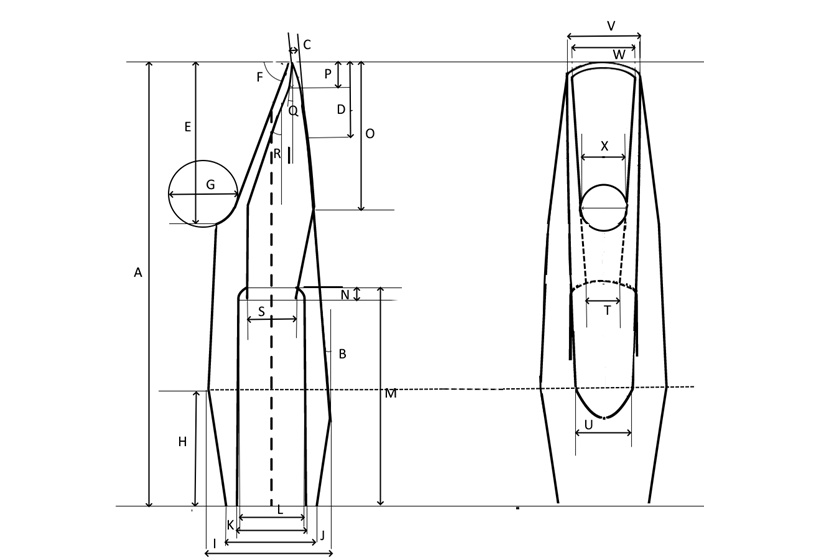
Main Specifications
| Manufacturer | DMC |
| Origin | Nederland |